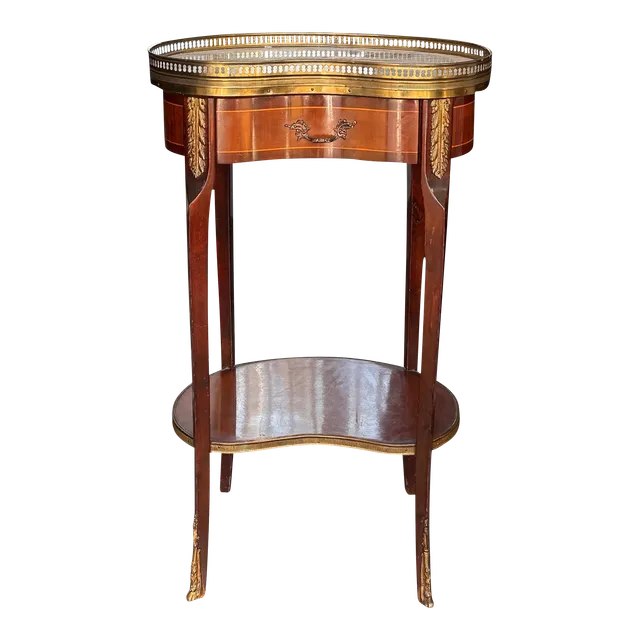
 Antique Louis XV Style French Inlaid Marble Top Side Table
1 / 9
French Louis XVI Revival Breccia Marble & Brass Side Table, c.1940's
$595
- Type
Side tables
- Origin
- Dimensions
Height 20.5 in × Width 20 in × Depth 15 in
- Condition
Original Vintage Condition
original vintage condition, the piece retains its period character and has been carefully inspected by our studio for stability and overall functionality.
- Items in listing
1 ID Number: Pro 200
Dealer notes
SPECIFICATIONS Designer: Unknown Manufacturer: Unknown Country: France Materials: Breccia Marble, Wood, Brass Period Style: Louis XVI Revival Date of Manufacturer: 1940's Condition: Original Vintage Condition Number of Items: 1 ID Number: Pro 200 Dimensions: 20.50”H x 20”W x 15”D Description: This French Louis XVI Revival side table, dating to the 1940's, combines elegant neoclassical proportions with richly contrasting materials. The oval Breccia marble top displays a distinctive mosaic-like pattern of warm cream, rose, ochre, brown, and darker mineral tones, framed by an openwork brass gallery. A dark-finished wood base supports the top on four slender fluted and tapered legs with turned details, reflecting the refined symmetry associated with Louis XVI design. The combination of decorative brasswork, colorful natural stone, and restrained architectural detailing gives the table a sophisticated French character suited for use as a side or occasional table. Presented in original vintage condition, the piece retains its period character and has been carefully inspected by our studio for stability and overall functionality. Fun Historical Fact Louis XVI furniture originated in late 18th-century France and embraced the symmetry and classical ornament inspired by ancient Greek and Roman design. The style was revived repeatedly in French decorative arts, allowing traditional forms such as fluted legs, marble tops, and pierced brass galleries to remain popular well into the 20th century. Breccia marble, recognized by its naturally fragmented and multicolored appearance, was especially effective in furniture because each cut of stone created a unique decorative surface. By the 1940's, French workshops continued producing classically inspired occasional furniture that combined traditional cabinetmaking forms with decorative stone and metalwork.
Listing information
Last checked
Added
Details are supplied by the dealer. Confirm availability and shipping before purchasing.
Loading history…