 Vintage Live Edge Redwood Burl Coffee Table
1 / 9
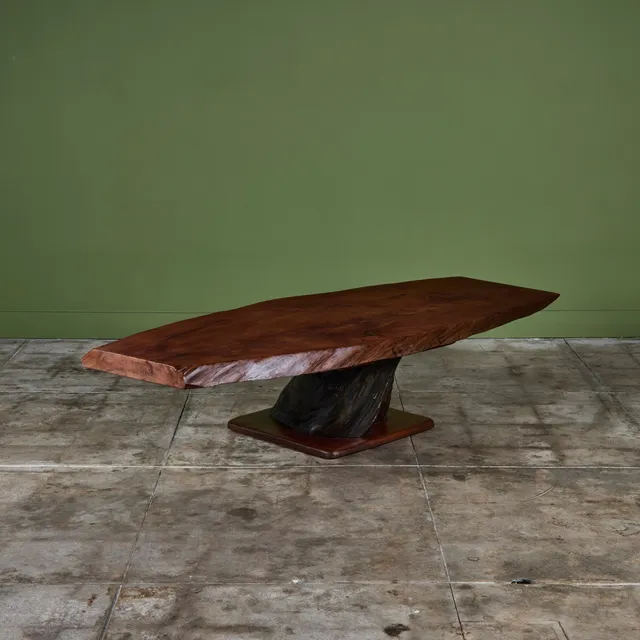
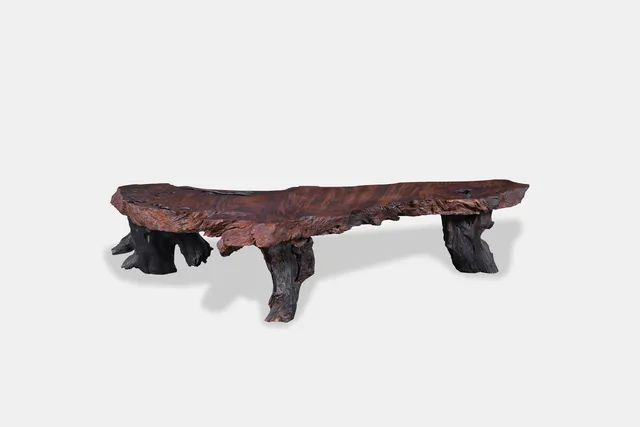
Vintage California Live-Edge Redwood Root Coffee Table, c.1970’s
$1,595
- Type
Coffee tables
- Origin
- Dimensions
Height 15 in × Width 75.5 in × Depth 27 in
- Condition
Original Vintage Condition
original vintage condition, the piece retains the natural surface character, age-related variation, and organic imperfections that are integral to its design.
- Items in listing
1 ID Number: 10683
Dealer notes
SPECIFICATIONS Designer: Unknown Manufacturer: Unknown Country: United States Materials: Live-Edge Redwood, Natural Root Wood Base Period Style: California Studio Craft Date of Manufacturer: 1970’s Condition: Original Vintage Condition Number of Items: 1 ID Number: 10683 Dimensions: 15”H x 75.50”W x 27”D Description: This striking California Studio Craft coffee table, dating to the 1970s, features a dramatic live-edge redwood slab supported by a naturally sculpted root wood base. The richly figured redwood top showcases organic grain variation, natural voids, and irregular edges that give the piece a one-of-a-kind sculptural presence. Its substantial root base reinforces the table’s connection to nature while creating a bold architectural form from every angle. Presented in original vintage condition, the piece retains the natural surface character, age-related variation, and organic imperfections that are integral to its design. Both functional and highly decorative, this vintage coffee table is a strong example of the California studio craft movement and its appreciation for natural materials and expressive woodworking. Fun Historical Fact California studio furniture of the 1960s and 1970s often celebrated the natural form of wood rather than hiding it beneath highly standardized construction. Redwood became especially popular among West Coast craftspeople because of its dramatic grain, large available slabs, and strong regional association with California. Live edges, burl formations, roots, and naturally occurring voids were frequently incorporated into furniture as intentional design elements. These pieces helped blur the line between functional furniture and sculpture, making each example visually unique.
Listing information
Last checked
Added
Details are supplied by the dealer. Confirm availability and shipping before purchasing.
Loading history…