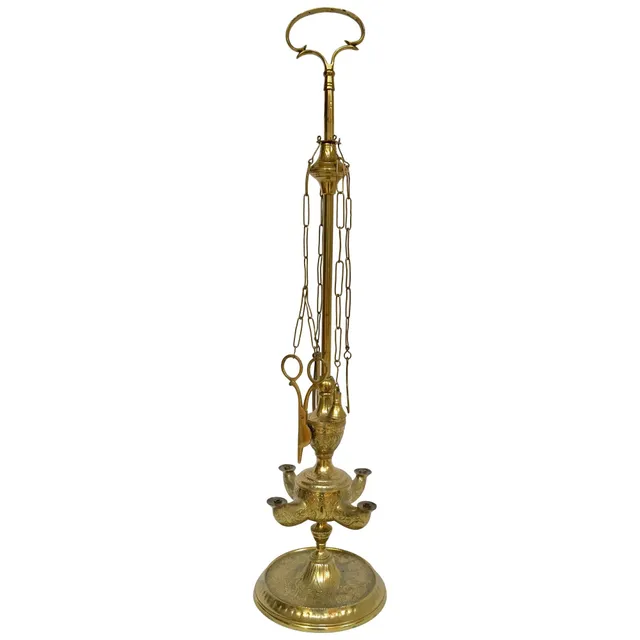
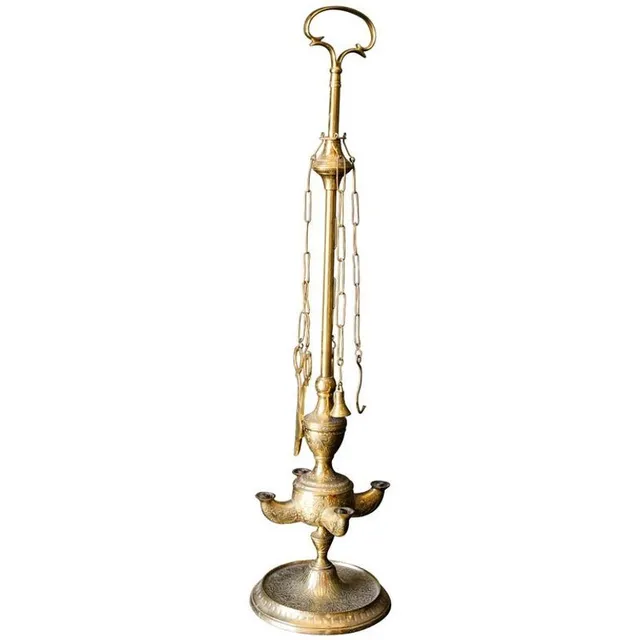
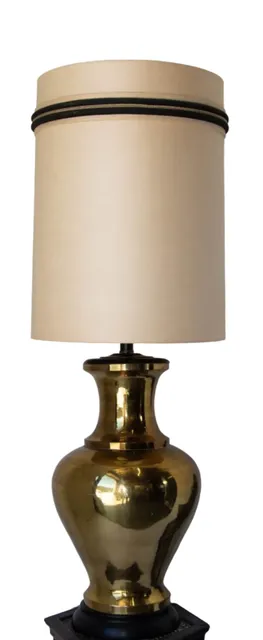
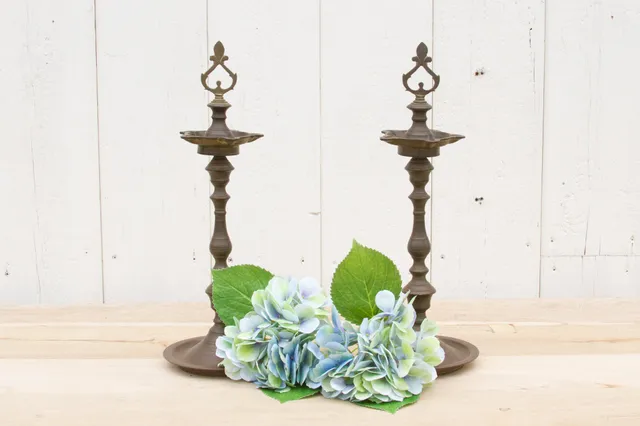
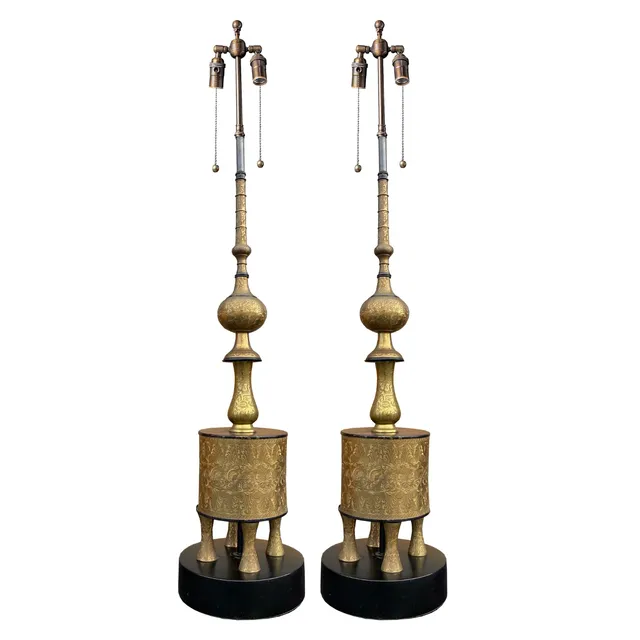
 PAIR OF MOROCCAN BRASS TABLE LAMPS
1 / 14
19th Century Moroccan Brass Hanukkah Oil Lamp Menorah, Antique Jewish Judaica
$2,650
- Maker
Unknown Moroccan artisan
- Named in listing
Attributed to Morocco
Attributed to Sefrou
- Period
Late 19th century, attributed
Circa 1880–1890, attributed Cultural tradition: Moroccan Jewish, Sephardic Judaica Style: Moroccan Folk Art, North African traditional metalwork
- Origin
Morocco, North Africa, possibly Sefrou
- Dimensions
Width 7.25 in × Depth 2 in
- Materials
Cast copper alloy, possibly brass or bronze Techniques: Cast metal, pierced openwork, relief decoration, handcrafted finishing
- Condition
View full details
Good antique condition with wear consistent with age and use. The surface retains an aged dark brown patina, areas of oxidation, and traces of green verdigris. The original patina has been preserved without polishing. A rare and decorative expression of Moroccan Jewish cultural heritage, combining the enduring tradition of Hanukkah illumination with the artistry of 19th-century North African metalwork.
Dealer notes
An exceptional antique 19th-century Moroccan Jewish Hanukkah oil lamp, or Hanukkiah, attributed to Morocco, possibly the historic Jewish metalworking center of Sefrou, circa 1880–1890. Crafted in cast brass or bronze-toned copper alloy, this finely detailed North African Judaica menorah is a beautiful example of traditional Sephardic Jewish ceremonial art and Moroccan folk craftsmanship. The richly ornamented openwork backplate features a central Tree of Life, flanked by two stylized lions and surrounded by birds, scrolling foliage, and intricate vegetal motifs. The symmetrical composition is framed by architectural columns and elaborate pierced decoration, reflecting the distinctive artistic vocabulary of antique Moroccan Jewish metalwork and the broader decorative traditions of North Africa. The Tree of Life, lions, and birds are particularly meaningful motifs in Jewish ceremonial art. The Tree of Life evokes spiritual continuity and wisdom, while the lions are traditionally associated with strength, protection, and the Lion of Judah. Together, these expressive symbols create an intricate sculptural composition characteristic of historic North African Hanukkah lamps. At the summit of the backplate is an elevated oil cup serving as the shamash, or attendant light. Below, a projecting row of eight individually formed, elongated oil reservoirs was designed to hold olive oil and wicks, one light for each of the eight nights of Hanukkah. This traditional nine-light arrangement distinguishes the Hanukkiah from the seven-branched Temple menorah. The cast-metal surface retains its deep, naturally aged brown patina, with areas of oxidation and green verdigris that accentuate the relief decoration and openwork craftsmanship. The original surface has been preserved without polishing, retaining the authentic antique character prized by collectors of historic Judaica and Jewish ritual objects. Historical Attribution and Museum References This distinctive type of cast-metal Hanukkah lamp belongs to a documented tradition of Moroccan Jewish ceremonial metalwork, particularly associated with Jewish communities in Fez, Meknes, and Sefrou during the 19th and early 20th centuries. Related examples can be found in important museum collections, including: Princeton University Art Museum: A Moroccan cast and chased brass Hanukkah lamp attributed to the Fez-Meknes region, circa 1875. The Jewish Museum, New York: A late 19th- to early 20th-century cast copper-alloy Hanukkah lamp attributed to Sefrou, Morocco. Center for Jewish Art, Hebrew University of Jerusalem: A Moroccan Hanukkah lamp from Sefrou, circa 1900, documenting the regional tradition of cast brass ceremonial lamps. Additional scholarly references include Lights in the Atlas Mountains: Hanukkah Lamps from the Collection of Zeyde Schulmann , published by the Israel Museum, Jerusalem, and Mordechai Narkiss's The Hanukkah Lamp , both important references for the study of historic Jewish ceremonial lighting. These related museum examples and publications offer valuable stylistic and historical comparisons, although they do not independently establish the precise workshop or date of manufacture of the present lamp. Collector's Appeal An evocative example of antique Moroccan Judaica, this 19th-century North African Hanukkah menorah combines traditional Jewish religious symbolism with the sculptural artistry of historic Moroccan brass casting. Its intricate Tree of Life design, paired lions, birds, pierced architectural framework, and original patinated surface make it particularly appealing to collectors of Sephardic Judaica, antique Hanukkah lamps, Jewish ceremonial objects, Moroccan antiques, and Mediterranean decorative arts. A distinctive historical object suitable for a curated collection of Jewish ritual art, North African folk art, or museum-inspired interiors. Details and Attribution Object: Antique Hanukkah oil lamp, Hanukkiah, Jewish ceremonial menorah Origin: Morocco, North Africa, possibly Sefrou Maker: Unknown Moroccan artisan Period: Late 19th century, attributed Date of manufacture: Circa 1880–1890, attributed Cultural tradition: Moroccan Jewish, Sephardic Judaica Style: Moroccan Folk Art, North African traditional metalwork Material: Cast copper alloy, possibly brass or bronze Techniques: Cast metal, pierced openwork, relief decoration, handcrafted finishing Dimensions: 8.75 inches high × 7.25 inches wide × 2 inches deep Condition: Good antique condition with wear consistent with age and use. The surface retains an aged dark brown patina, areas of oxidation, and traces of green verdigris. The original patina has been preserved without polishing. A rare and decorative expression of Moroccan Jewish cultural heritage, combining the enduring tradition of Hanukkah illumination with the artistry of 19th-century North African metalwork.
Listing information
Last checked
Added
Details are supplied by the dealer. Confirm availability and shipping before purchasing.
Loading history…