 48411. Spanish Revival Standing Cabinet With Shelves And Carved Panel
1 / 9
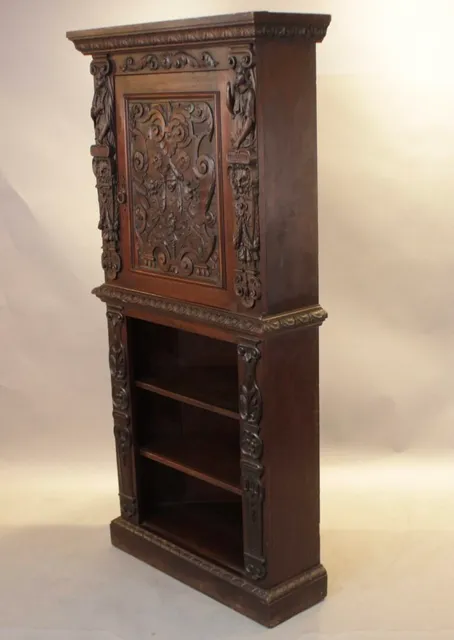
Renaissance Revival Carved Tiger Oak Cabinet w/ Walnut Burl Panels, c.1920’s
$1,200
- Type
Cabinets & wardrobes
- Origin
- Dimensions
Height 64 in × Width 41 in × Depth 18 in
- Condition
Original Vintage Condition
- Items in listing
1 ID Number: Pro 095
Dealer notes
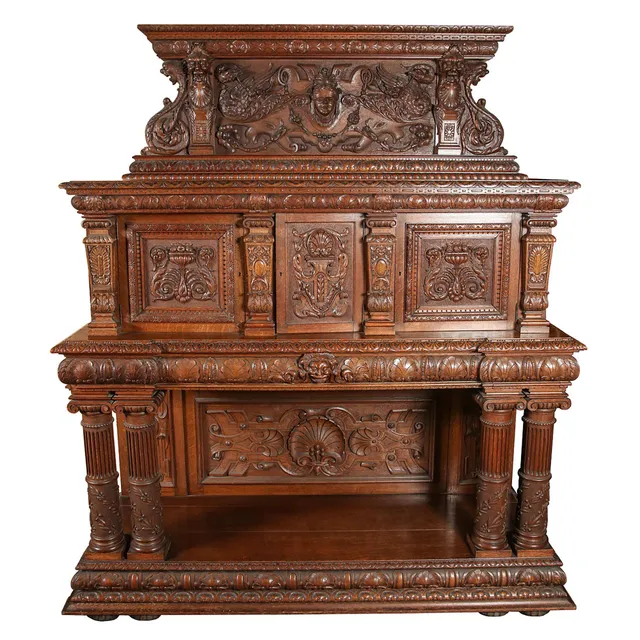
Designer: Unknown Manufacturer: Unknown Country: United States Materials: Tiger Oak, Walnut Burl Wood Period Style: Renaissance Revival Date of Manufacturer: c.1920’s Condition: Original Vintage Condition Number of Items: 1 ID Number: Pro 095 Dimensions: 64”H x 41”W x 18”D Description: This substantial Renaissance Revival cabinet showcases beautifully carved tiger oak, elevated by richly figured walnut burl panels that bring warmth and depth to its bold architectural form. From the crown molding down to the base, the hand-carved botanical details—scrolling leaves, florals, and vine-like flourishes—create a sense of movement and craftsmanship you can appreciate from every angle. Those motifs weren’t just decorative; they were meant to evoke abundance, growth, and a connection to nature, giving the piece a quiet symbolism that feels both timeless and intentional. Turned column supports add a powerful, almost sculptural presence, framing the doors like a miniature façade and reinforcing the cabinet’s Old World character. Solidly built and highly detailed, it’s the kind of heirloom-quality case piece that was made to endure—equally striking as a display cabinet, bar cabinet, or statement storage piece. Fun Historical Fact In the 1920s, Renaissance Revival furniture became popular in American homes because it signaled heritage, prosperity, and “Old World” sophistication during a period of rapid modern change. Carved botanical ornament—acanthus leaves, rosettes, and floral garlands—was especially favored because it symbolized vitality and abundance, ideas tied to classical design traditions reaching back to ancient Greece and Rome. Many revival cabinets were intentionally built like small architectural monuments, borrowing the language of columns, cornices, and panels to make everyday furniture feel grand. The era also embraced dramatic veneers like walnut burl, prized for its swirling grain patterns that made each piece feel one-of-a-kind, almost like natural artwork.
Listing information
Last checked
Added
Details are supplied by the dealer. Confirm availability and shipping before purchasing.
Loading history…