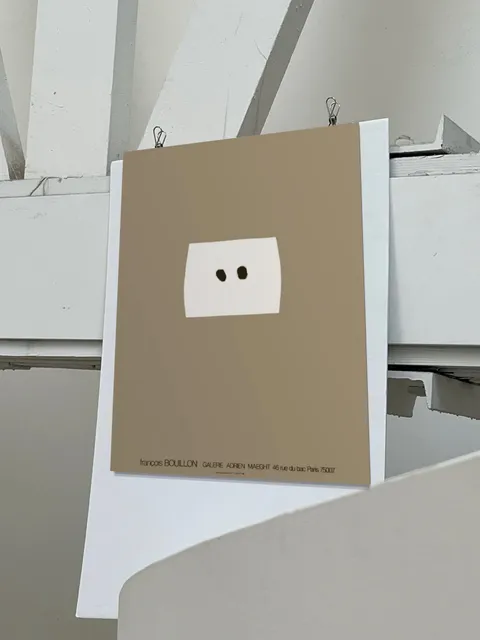
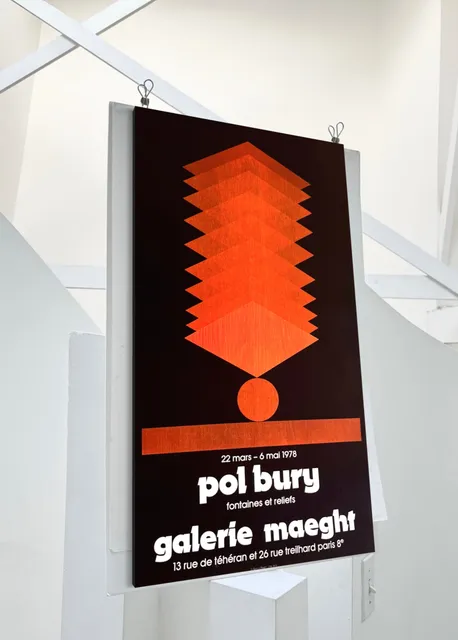
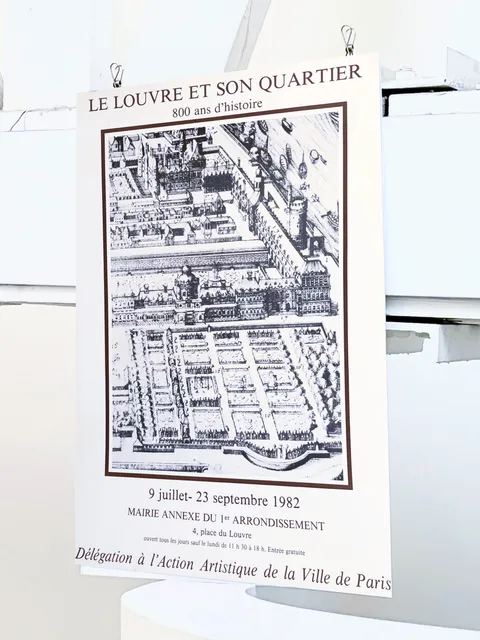
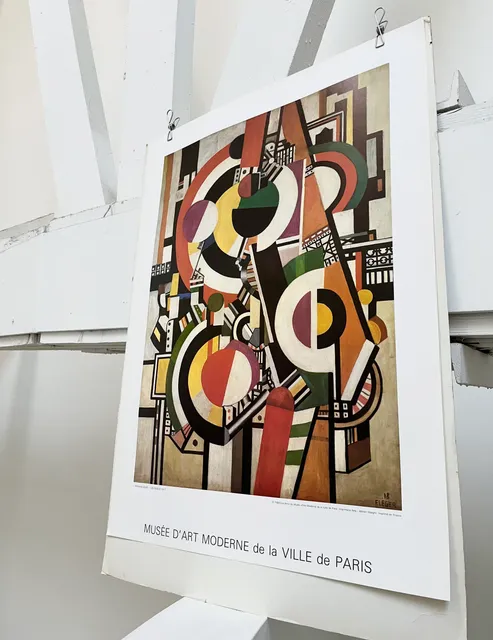
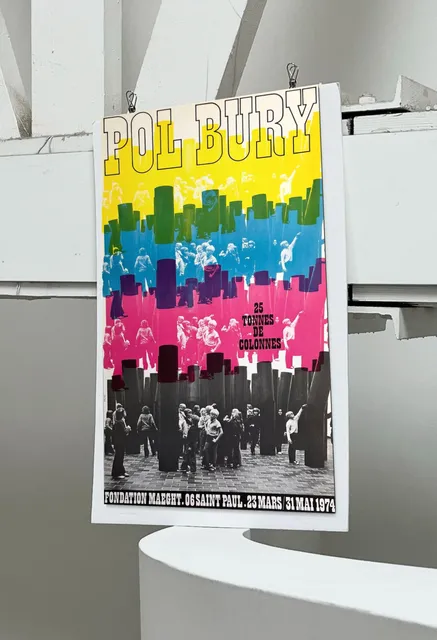
 1974 Pol Bury French Art Exhibition Print
1992 Gino Severini French Art Exhibition Print
$179.95
Form
View listing ↗Los Angeles, CA · Reported available
- Designer
- Artist
- Type
Prints
- Period
1992
- Origin
- Dimensions
Width 18.5 in × Height 31.5 in
- Materials
Printed by Arte Paris for Adrien Maeght
- Condition
View full details
Excellent condition. About the Artist - Gino Severini Gino Severini (1883–1966) was an Italian painter best known as one of the leading figures of the Futurist movement. Born in Cortona, Italy, he moved to Rome as a young man, where he met fellow painter Umberto Boccioni and studied under Giacomo Balla, who introduced him to divisionist techniques. In 1906 Severini relocated to Paris, immersing himself in the city's avant-garde circles and forming friendships with artists like Picasso, Braque, and Modigliani. This Parisian vantage point made him something of a bridge between Italian Futurism and French Cubism, and in 1910 he became a signatory of the Futurist Manifesto alongside Boccioni, Balla, Carrà, and Russolo. Severini's most celebrated works fused Futurism's obsession with movement, speed, and modern urban life with Cubist fragmentation. Paintings like "Dynamic Hieroglyphic of the Bal Tabarin" (1912) captured the frenetic energy of Parisian nightlife through shattered, kaleidoscopic forms. He was particularly drawn to depicting dancers, cafés, and the sensory chaos of the city, distinguishing his work from other Futurists who more often focused on machines and speed itself. During this period he also married Jeanne Fort, daughter of the French Symbolist poet Paul Fort. After World War I, Severini's style shifted markedly toward a more classical, ordered aesthetic, influenced by his growing interest in Renaissance art, mathematical proportion, and Catholic themes. He worked extensively in mosaic and fresco, taking on religious commissions in Switzerland and Italy, and wrote theoretical texts on aesthetics and composition. He spent much of his later life moving between Paris and Rome, remaining an active and respected artist until his death in 1966. Today he's remembered as a key link between Italian and French modernism, an artist who helped define Futurism's visual language before charting his own path back toward classical order.
Condition: Excellent condition.
- Medium
Original art exhibition print
- Items in listing
1
Additional details
- National description
French
Dealer notes
1992 Gino Severini French Art Exhibition Print. Original art exhibition print promoting an event at Fondation Maeght showcasing the artist's works. Made in France. Printed by Arte Paris for Adrien Maeght. Featuring Severini's cubist 'La Danseuse Bleue' from 1912. Size: 18.5”W x 31.5”H. About the Artist - Gino Severini Gino Severini (1883–1966) was an Italian painter best known as one of the leading figures of the Futurist movement. Born in Cortona, Italy, he moved to Rome as a young man, where he met fellow painter Umberto Boccioni and studied under Giacomo Balla, who introduced him to divisionist techniques. In 1906 Severini relocated to Paris, immersing himself in the city's avant-garde circles and forming friendships with artists like Picasso, Braque, and Modigliani. This Parisian vantage point made him something of a bridge between Italian Futurism and French Cubism, and in 1910 he became a signatory of the Futurist Manifesto alongside Boccioni, Balla, Carrà, and Russolo. Severini's most celebrated works fused Futurism's obsession with movement, speed, and modern urban life with Cubist fragmentation. Paintings like "Dynamic Hieroglyphic of the Bal Tabarin" (1912) captured the frenetic energy of Parisian nightlife through shattered, kaleidoscopic forms. He was particularly drawn to depicting dancers, cafés, and the sensory chaos of the city, distinguishing his work from other Futurists who more often focused on machines and speed itself. During this period he also married Jeanne Fort, daughter of the French Symbolist poet Paul Fort. After World War I, Severini's style shifted markedly toward a more classical, ordered aesthetic, influenced by his growing interest in Renaissance art, mathematical proportion, and Catholic themes. He worked extensively in mosaic and fresco, taking on religious commissions in Switzerland and Italy, and wrote theoretical texts on aesthetics and composition. He spent much of his later life moving between Paris and Rome, remaining an active and respected artist until his death in 1966. Today he's remembered as a key link between Italian and French modernism, an artist who helped define Futurism's visual language before charting his own path back toward classical order.
Listing information
Last checked
Added
Details are supplied by the dealer. Confirm availability and shipping before purchasing.
Loading history…